
Is Alpaca Hypoallergenic? Why Socks Are Blended and Knits Can Be 100% Alpaca
23rd Jan 2026
If you’ve ever said, “I’m allergic to wool,” you’re not alone. For a lot of people, that sentence becomes shorthand for “anything fuzzy makes me itch.”
So when you start hearing about alpaca, it’s normal to wonder: Is alpaca really different, or am I just signing up for another round of redness and irritation?
Good news: not all animal fibers behave the same way. Alpaca is different from traditional sheep’s wool in a few important ways. That’s why many people who can’t wear wool comfortably can wear alpaca without issues.
At Sun Valley Alpaca Co., we hear from many shoppers who want warm, natural-fiber socks and knits that don’t itch. This guide walks through what “hypoallergenic” actually means, how alpaca compares to wool, and why you’ll often see blends in socks but 100% alpaca in sweaters, wraps, and other knitwear.
What “Hypoallergenic” Really Means
“Hypoallergenic” doesn’t mean “no one on earth will ever react to this.” It means a material is less likely to cause irritation or allergic responses for most people.
Alpaca is generally considered hypoallergenic because:
- It’s naturally lanolin-free.
- Its fibers tend to be smoother than many types of sheep’s wool.
- It helps manage moisture and temperature, which can reduce itchiness and irritation over time.
For people who can’t wear standard wool, those differences often make alpaca a comfortable alternative, especially in socks and knits worn close to the skin.
Why Some People React to Wool
Most “wool allergies” aren’t about the word wool on the label. They’re about what’s happening on your skin.
A few common culprits:
- Lanolin: Sheep’s wool contains lanolin, a natural oil that can trigger allergic reactions in some people. Symptoms might include redness, itching, or a rash where the fabric touches your skin.
- Fiber texture: Many wools are coarser and have more pronounced surface scales. That rougher texture can feel prickly and create friction, especially if your skin is already sensitive.
- Residues and dander: Wool can carry trace amounts of dander or processing residues, which may bother very sensitive wearers.
On top of that, a lot of us are used to ultra-smooth fabrics—cotton tees, performance leggings, and silky pajama pants. When you introduce a natural animal fiber after years of smooth synthetics, any texture can feel like “too much” at first.
Sometimes that’s a true allergy. Sometimes it’s simply your skin adjusting to a new kind of fiber.
Why Alpaca Often Works for Wool-Sensitive People
Alpaca sidesteps a few of the big issues that make wool uncomfortable.
- No lanolin: Alpaca fiber is naturally free of lanolin, so one major trigger is off the table from the start.
- Smoother feel: Compared to many sheep’s wools, alpaca fibers have a smoother, less scaly structure. That can mean less friction, less prickliness, and fewer chances for dander to bother your skin.
- Helps regulate heat and moisture: Alpaca is excellent at holding warmth without trapping wetness against your skin. When your feet stay drier and at a more balanced temperature, you’re less likely to feel itchy or clammy.
That doesn’t mean alpaca is magically perfect for absolutely everyone, but many people who can’t tolerate wool are pleasantly surprised by how comfortable alpaca feels.
Why Alpaca Socks Are Blended
If alpaca is so wonderful, why aren’t socks just 100% alpaca?
It comes down to how hard socks have to work.
Inside your shoes, socks deal with:
- Constant stretching and flexing
- Friction at the heel, toe, and ball of the foot
- Heat, sweat, and pressure all day long
On its own, alpaca is not very elastic. It doesn’t snap back into shape the way a technical fiber or even some cotton blends can. Pure alpaca socks would be cozy for about five minutes, and then they’d slouch, bag out at the heel, and wear through far too quickly.
That’s why well-made alpaca socks are intentionally blended with supportive fibers. Those extra fibers help socks:
- Maintain their shape and stay in place on your foot
- Reinforce high-wear areas like heels and toes
- Improve durability and longevity, so you’re not blowing through pairs every season
- Handle daily wear and wash cycles without stretching out
In other words, using less than 100% alpaca in socks is not “cutting corners.” It’s smart engineering that lets alpaca shine where it matters most: softness, warmth, moisture management, while other fibers quietly handle the heavy lifting.
Why Alpaca Knits Can Be 100% Alpaca
Now compare socks to a sweater, a poncho, a scarf, or a wrap.
Knitwear like this doesn’t live inside your shoes. It doesn’t rub against a hard surface with every step. It doesn’t need to cling tightly to your foot and bounce back from thousands of flexes a day.
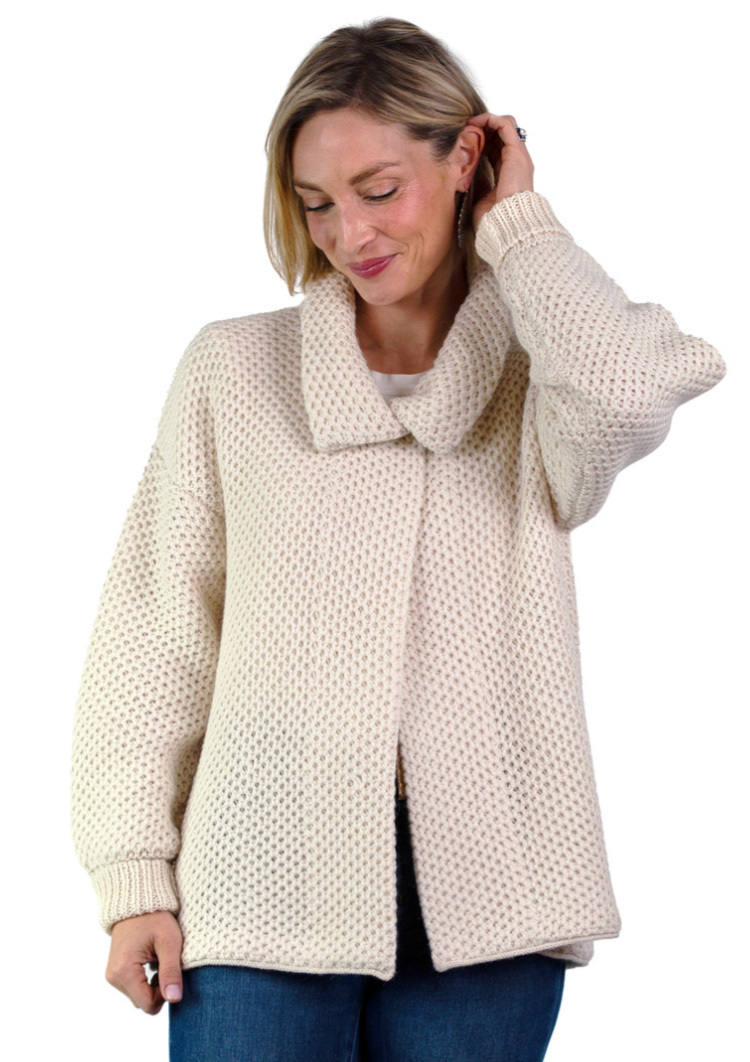
Because these pieces experience far less friction and don’t require the same kind of stretch recovery, they can be made from 100% alpaca (or baby alpaca) without sacrificing performance.
That’s where pure alpaca really gets to show off. In 100% alpaca knits, you get:
- Maximum softness and a luxurious hand-feel
- Breathable warmth that feels cozy, not stifling
- Lightweight insulation that’s easy to wear indoors and out
For wool-sensitive people, 100% alpaca sweaters and accessories can feel like finally finding that “real wool sweater” experience—without the itch or irritation that drove you away from wool in the first place.
How to Try Alpaca If You’re Wool-Sensitive
If you’ve had bad experiences with wool, it’s understandable to be cautious. Here are a few practical ways to test an alpaca gently:
- Start small. Begin with a pair of alpaca-blend socks or a lightweight accessory rather than a heavy, all-over sweater.
- Do a spot test. Wear the item for a short window at home—an hour or two—so you can see how your skin responds before committing to a full day.
- Layer smart. If you’re nervous, wear a thin cotton or bamboo layer underneath your alpaca piece at first. As your skin adjusts, you may find you can skip the extra layer.
- Pay attention to fit and thickness. Sometimes it’s not the fiber but the combination of warmth, tightness, and friction that causes discomfort. A well-fitted, breathable alpaca sock is often more comfortable than a thick, tight synthetic sock that traps heat.
Many Sun Valley Alpaca Co. customers who thought they “couldn’t do wool” find they can comfortably wear alpaca, especially in socks and knits designed for sensitive skin.
The Bottom Line
Alpaca is one of the most skin-friendly natural fibers available today. When it’s blended thoughtfully in socks, you get durable, supportive pairs that stay put, breathe well, and feel soft against your skin. When it’s used at 100% in knitwear, you get sweaters, wraps, and accessories that deliver all the cozy, natural fiber goodness without the harshness many people associate with wool.
Understanding why alpaca is used the way it is—blended in socks, pure in many knits—helps you shop with confidence, especially if you’ve struggled with wool in the past.
If you’re wool-sensitive but still crave real, natural-fiber warmth, alpaca is well worth a try. For many people, it’s the difference between “I can’t wear wool” and “I finally found socks and knits I actually look forward to putting on.”